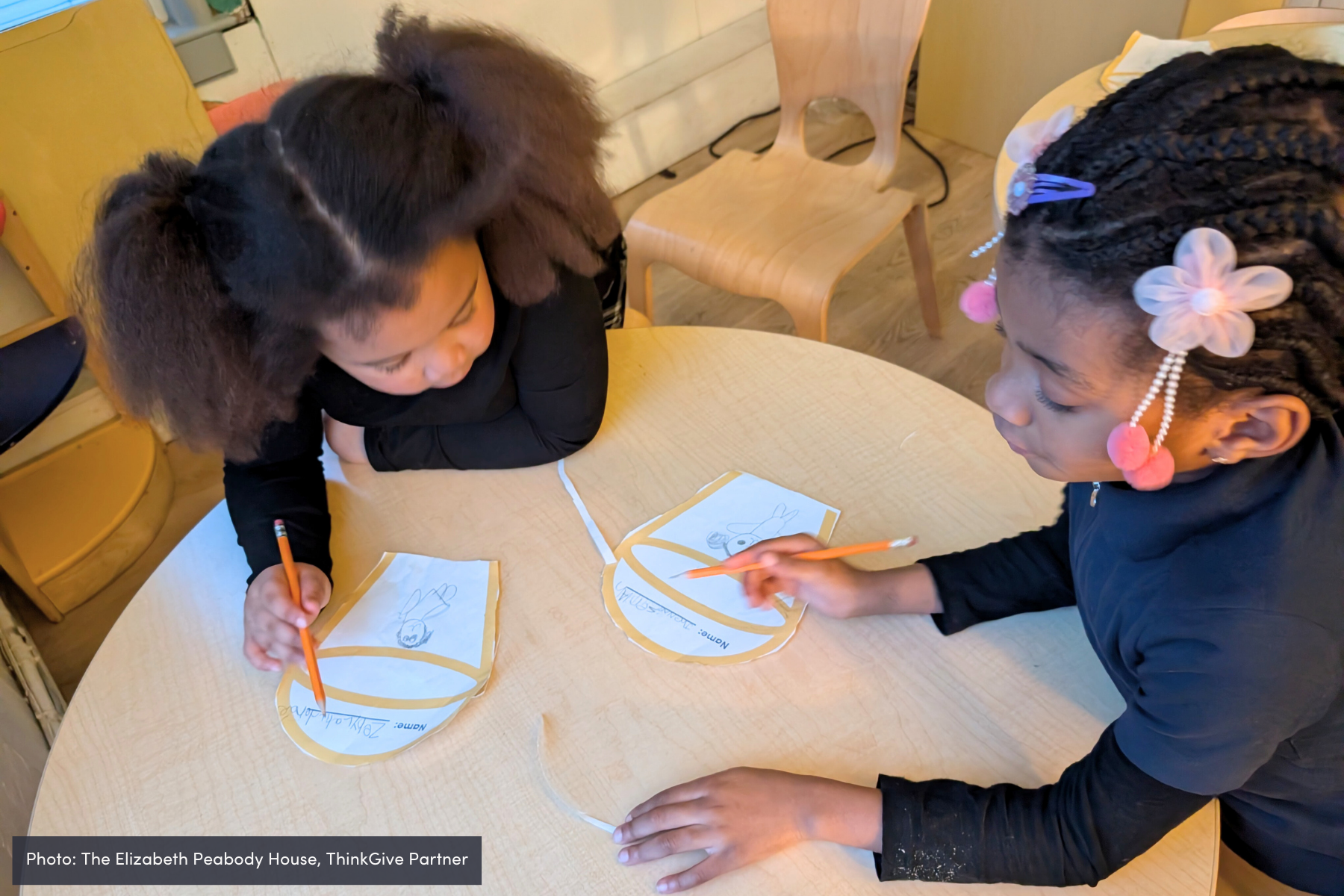
 Nita Doss is the After-School and Summer Program Director at Elizabeth Peabody House, a nonprofit supporting low-income and immigrant families in Somerville, MA, and surrounding areas. Hannah Brewster, ThinkGive Program Coordinator, and Scott Berman, ThinkGive Director of Marketing, recently visited and experienced firsthand their strong sense of belonging. They later spoke with Nita about the practices and mindset that help create that atmosphere.
Hannah Brewster: Why were you interested in discussing the topic of belonging?
Nita Doss: When I was a kid, I was in after-school programs and summer camps. They were a big part of my life, and I was the kid who didn’t want to go. Then there was one person—I think she was in high school at the time—who just never gave up on me. She always talked to me when I walked in and asked what I was interested in, because she could tell I didn’t want to be there. I’d give her the worst attitude, and she was still there for me.
So now, wherever I work with youth, I make sure every kid feels like they belong. Because if they don’t feel like they belong, how is anything else important going to happen? It won’t. It starts with a welcoming environment and everyone feeling safe. Miss C made me feel safe—and even though she’s married now, I still call her Miss C!
Scott Berman: Can you share a story about how you work to create a sense of belonging?
Nita Doss: Sometimes we will have a new child start in our program when the school year is almost over. So how do we make that child feel welcome? We started working with a child about a month ago. He is on the spectrum, and one of his goals was to connect with kids his age and make a friend. This was the first after-school program he’d ever attended.
I always start with a tour, and when I give tours, I’m really just talking to the child. I let them go off and play, then have a separate conversation with the parent or guardian. The connection we make during the tour makes the transition easier when they actually start. I also introduce them to staff, who engage them in small conversations as opportunities arise.
This child came in and connected easily with all the adults—that’s his strength. But we noticed he struggled to connect with kids his age. He would shy away and go to the library area because he loves to read. We let that happen for about a week, and then we decided it was time to start encouraging him to spend time with other kids. So we paired him with a buddy, which works well for most kids. I think kids learn best from other kids, and they feel a stronger sense of belonging when peers their age show them around or play with them.
And he made a friend! He was super excited—very giddy and giggly, just incredibly proud of himself, which made me so happy. He had a goal to make a friend, which he hadn’t been able to do in school. He’s been here about a month, and now he has someone he can call a friend.
Hannah Brewster: I heard some pretty specific strategies in there. Were these planned ahead of time, or did they develop as you went?
Nita Doss: I took bits and pieces from other youth programs I’ve worked in and figured it out as I went. When I noticed the buddy system working for one child, it became something standard. I’d just walk up to a kid and say, “Hey, do you want to show so-and-so around?” They’d say yes, and off they’d go. After the first couple of days, I wouldn’t even say we were assigning a buddy anymore—the kids just do it on their own, which is nice.
Scott Berman: What’s the ripple effect of focusing on belonging with one student? How does that spread?
Nita Doss: The younger kids look up to the older kids, and the older kids look up to the younger kids, too. I know that sounds surprising, but they really do learn from each other. If one child starts doing something and they see staff supporting it, it encourages others to do the same or try something new.
I have a 7-year-old who started as a kindergartner—full of personality, completely herself from day one. I also had her sister, who was about a year and a half older and had been in the program longer, but was very quiet. Watching her younger sister be herself helped her slowly open up and grow into the program. There’s always that one child who starts something, and the rest follow.
Scott Berman: Are there things that get in the way of creating a sense of belonging?
Nita Doss: Sporadic attendance is definitely a challenge. If a child is enrolled three days a week but only shows up once, we’re doing this work, and then every time they return, we’re starting over. We also have some students who only attend during school vacations and the summer. Their schedules make things tricky. But we’re in it for the long run, and we’ll restart as many times as needed until it sticks.
Hannah Brewster: Beyond creating a welcoming, kind environment, are there specific strategies you return to—especially with variable attendance?
Nita Doss: Once we know what kids like, we set out activities or items on the tables each day that we know they enjoy. That goes into belonging as well, because it helps them realize we’re paying attention to what they like. So if a child shows up sporadically but sees their favorite thing waiting for them, it feels like they never left.
Also, when a child hasn’t been there in a while, staff naturally gravitate toward them and engage them in conversation. Then the other kids see that and do the same. We had a child who was out for a month after three surgeries. When he came back, everyone wanted to welcome him—kids, staff, everyone. It was like, “You’ve been gone a month, but you were always part of this.” Little things like that make a big difference in helping with the reset.
Scott Berman: How do conversations with parents and guardians support a sense of belonging? What does that communication look like?
Nita Doss: I rely on phone calls and face-to-face interaction. I try to get to know parents on a personal level—not too personal, but enough that we can relate to each other. That way, when I need to have a more difficult conversation—like suggesting additional support or sharing concerns—it’s much easier because we’ve already built a relationship through regular check-ins and positive updates about their child.
We also have a resource table for families. I have one parent who will talk about the Celtics and the Patriots for 30 minutes at pickup, and because of that relationship, it’s easy for me to say, “Hey, your child is struggling with this—can we try X, Y, and Z?” Most parents respond with trust and openness.
That said, some conversations are still difficult, no matter how strong the relationship. It can be hard for parents to hear that their child may need extra support—especially when we’re seeing behaviors they don’t see at home. I had a child who would curl up in a corner whenever he couldn’t complete a drawing the way he wanted. That conversation took time. A full care team was created, and we all worked together to support his success. It’s a sensitive topic for many parents, but my job is to advocate gently for the child. Even if that’s uncomfortable at times, it’s necessary.
Scott Berman: Could you speak to how ThinkGive supports the sense of belonging you’re building?
Nita Doss: We initially tried ThinkGive with the older kids, and it went okay, but they started to disengage. After talking with Hannah, I decided to try it with our kindergartners and first-graders. For them, it’s so important to start building social-emotional skills early, because they’re like sponges. And there are still kids who are significantly struggling—COVID was a while ago, but the effects are still very real.
My program is SEL-based, but we’re not SEL experts like ThinkGive is. We were just scratching the surface, trying to build a curriculum where kids learn these skills without even realizing it—which is hard when you’re not a specialist. Online resources only go so far.
With ThinkGive, the kids are genuinely learning tools and skills. I love the planting metaphor used in the Planting Seeds program. The kids think they’re learning how to take care of a plant, but really, it’s about taking care of themselves. They are the seed. When they—or others—put care into them, that’s how they grow. I think that’s strengthened the sense of belonging, too, because kids are learning about themselves in ways they didn’t realize were possible.
They love it. I hope that they start teaching their peers what they’ve learned, and when the next group of kindergartners comes in, the older kids can pass it on—until eventually every child in the program has experienced ThinkGive.